Top 5 Techniques to Overcome Test Anxiety
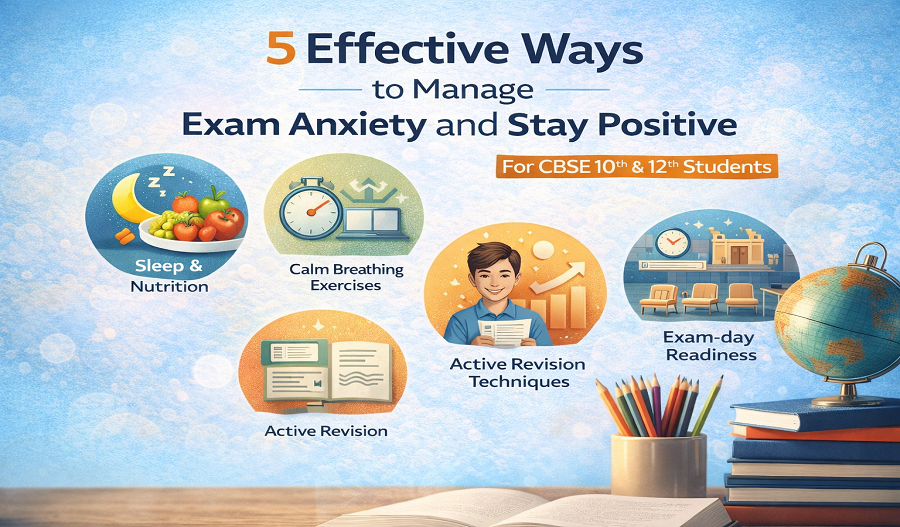
5 Effective Ways to Manage Exam Anxiety
A Guide for CBSE Class 10 & 12 Students
If you are reading this during your board exams, you are probably feeling the pressure. Your family has expectations. Your teachers are counting on you. Your future feels like it depends on these few papers.
That pressure is real, and it is completely normal to feel stressed.
In fact, a 2023 survey found that 81% of Class 10 and 12 students in India report feeling "extreme exam stress." You are not alone in feeling this way.
Here is something important to know: some stress is actually helpful. Scientists call this the Yerkes-Dodson Law. It says that a moderate amount of stress improves your focus and performance.
Think of it like this: if you feel no stress at all, you might not take the exam seriously. But if you feel too much stress, your mind goes blank, your heart races, and you cannot think clearly.
The goal is not to eliminate all anxiety. The goal is to manage it so it helps you instead of hurting you.
This guide will give you five practical, science-backed ways to keep your stress in the helpful zone during your board exams.
1. Prioritize "Brain Fuel": Sleep and Nutrition
Many students think the solution to exams is to study more hours. So they skip sleep, drink lots of coffee, and study until 2 AM.
This actually makes your performance worse, not better.
The Science of Sleep
When you sleep, your brain does something critical: it takes everything you studied during the day and moves it from temporary storage to permanent memory. This process is called "memory consolidation."
If you skip sleep to study more, you are essentially wasting your study time. Your brain cannot hold onto the information without those 7-9 hours of sleep.
Studies show that a well-rested brain understands new concepts faster and solves problems more accurately than a tired brain. You will actually learn more in 4 hours with proper sleep than in 6 hours with no sleep.
What About Nutrition?
Your brain uses 20% of your body's energy, even though it is only 2% of your body weight. During exams, when you are thinking intensely, it needs even more fuel.
Brain-Friendly Foods During Exams
- Breakfast: Eggs, whole grain toast, or oats (slow-release energy)
- Snacks: Nuts, fruits, or dark chocolate (avoid heavy sweets)
- Lunch/Dinner: Balanced meals with protein, vegetables, and grains
- Hydration: Drink water regularly (dehydration reduces focus)
- Avoid: Too much caffeine (causes anxiety and energy crashes)
2. Master Quick Calming Techniques
Even with all the preparation in the world, you might still feel panic creeping in during the exam. Maybe you see a difficult question. Maybe you forget something you studied well.
In those moments, you need quick tools to calm your nervous system.
Here are two breathing techniques that work in under one minute. You can do them silently at your desk without anyone noticing.
?️ The Physiological Sigh
Takes: 15 seconds
Why it works: This type of breathing quickly reduces the stress hormone cortisol in your body. It is one of the fastest ways to calm panic.
? Box Breathing
Takes: 1 minute
Why it works: Equal-length breathing balances your nervous system and brings you back to emotional control.
When to Use These Techniques
- Right before entering the exam hall
- When you feel panic rising during the exam
- If you encounter a question that makes you nervous
- During the night before an exam if you feel anxious
3. Use Active Revision Over Passive Reading
Most students revise by reading their notes over and over. They read a chapter five times and feel confident because it looks familiar.
But familiarity is not the same as memory.
When the exam question appears, they realize they cannot actually recall the information. They recognize it when they see it, but they cannot produce it from memory.
The Science of Active Recall
Research shows that students who quiz themselves (active recall) retain up to 55% more information than students who just re-read notes.
Why? Because every time you force your brain to retrieve information from memory, you strengthen that memory pathway. Reading just makes you recognize information—it does not build recall.
How to Practice Active Revision
Spaced Repetition: Review at the Right Intervals
Do not review everything every day. Your brain remembers better when you space out your reviews:
- Day 1: Study new topic
- Day 2: Quick review (5-10 minutes)
- Day 5: Active recall test
- Day 10: Brief revision
- Before exam: Final quick review
This spacing fights the "forgetting curve" and builds long-term memory with less total time.
The "Easy Win" Strategy
When you sit down to revise, start with a topic you already know reasonably well. Solve a few questions correctly to build momentum and confidence. Then move to harder topics.
Starting with the hardest topic when your brain is not warmed up often leads to frustration and procrastination.
4. Cultivate a Growth Mindset and Positive Self-Talk
The way you talk to yourself matters more than you think. Your internal dialogue directly affects your performance.
If you keep telling yourself "I am going to fail" or "I am not smart enough," your brain starts believing it. This creates more anxiety and actually reduces your ability to think clearly during the exam.
Negative Thought Patterns to Watch For
- "I am terrible at Math" → This labels you permanently instead of recognizing it is a skill you can improve
- "One bad exam ruins everything" → This ignores all your other achievements
- "Everyone else is smarter than me" → This is almost never true and is not helpful
- "I should have studied more" → Regret before the exam only increases anxiety
Replace Negative Thoughts with Realistic Positive Ones
Say: "I will do my best, and that is enough"
Say: "This subject is challenging, but I am improving"
Say: "I have prepared for this. I can handle one question at a time"
Say: "I have studied this. My brain will recall it when I need it"
Visualization: Practice Mental Success
The night before your exam, spend 5 minutes visualizing success:
- Imagine yourself walking into the exam hall feeling calm
- See yourself reading the question paper with confidence
- Picture yourself solving questions you know well
- Visualize yourself leaving the hall feeling satisfied with your effort
Athletes use this technique before big competitions. It primes your brain for success and reduces anxiety.
5. Practical Exam-Day Survival Tips
The morning of your exam is not the time to cram new information. It is time to set yourself up for success with smart practical choices.
Your Exam Day Checklist
This gives you time to settle in, visit the washroom, and calm your nerves. Rushing at the last minute increases anxiety.
Before the exam, students often gather and talk about what they studied or didn't study. This creates panic. Find a quiet corner instead and do your breathing exercises.
Many students lose marks simply because they did not read the instructions. Take the first 2-3 minutes to read everything before you start writing.
Scan the paper and start with questions you are confident about. This builds momentum and gives you points in the bank before tackling harder questions.
If you cannot remember something, do not sit there panicking. Use your breathing technique, skip that question, and come back to it later. Often the answer will come to you once you relax.
Check the time every 15-20 minutes to pace yourself. But do not check it every 2 minutes—that increases anxiety without helping.
Quickly check your answers, ensure you wrote your roll number correctly, and make sure you did not skip any questions by accident.
What to Pack the Night Before
- Admit card and ID proof
- 3-4 blue/black pens (yes, bring extras!)
- Pencils, eraser, sharpener, ruler
- Transparent water bottle (stay hydrated)
- Light snack for after the exam (not during)
- Watch (if phones are not allowed)
Pack everything the night before so you are not rushing in the morning.
You Are Not Alone: CBSE Support Resources
The CBSE understands that board exams can be stressful. They have launched initiatives to help students manage this pressure:
- Pariksha Pe Charcha: An annual event where students can share their concerns and get advice directly from experts and educators
- CBSE Counseling Services: Many schools offer counseling support during exam season
- Helplines: If you are feeling overwhelmed, talk to a trusted teacher, counselor, or family member. Your mental health matters more than any exam.
If anxiety becomes too much to handle, please reach out for help. There is no shame in asking for support.
Final Words: You Are More Than Your Marks
Board exams are important. They are a milestone in your academic journey, and it is natural to want to do well.
But here is what you need to remember: these exams do not define your entire worth or your entire future.
You are not just a percentage. You are a person with unique strengths, talents, and potential. One set of exams cannot measure all of that.
Do your best. Use the techniques in this guide to manage your stress. Sleep well, eat well, breathe deeply, and trust your preparation.
No matter what happens in these exams, you will be okay. You have worked hard. That effort counts, regardless of the result.
Go into that exam hall with confidence. You are ready. You've got this.

.png)